

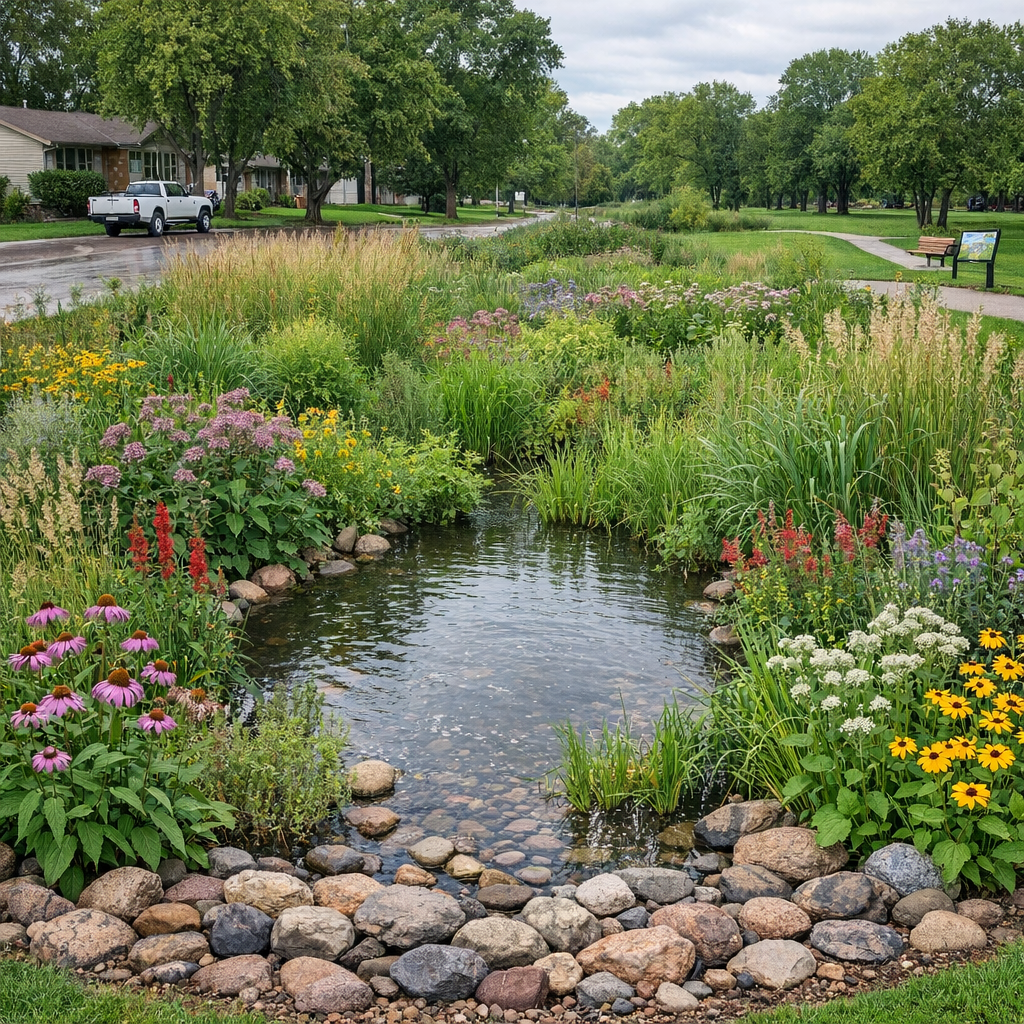
Sioux Falls is taking proactive steps to address environmental challenges by implementing green infrastructure projects aimed at managing stormwater, reducing localized flooding, and improving water quality. These initiatives reflect the city’s commitment to sustainable urban development and environmental stewardship.
Green Infrastructure Initiatives
Traditional stormwater management systems often rely on concrete channels and pipes to quickly divert water away from urban areas. In contrast, green infrastructure employs natural processes to manage rainwater where it falls. This approach includes the use of bioretention cells and rain gardens, which utilize engineered soil and native plants to capture, filter, and absorb stormwater.
Recently, the city installed rain gardens and bioretention cells at two locations: West 28th Street and South Covell Avenue, and West 35th Street and Duluth Avenue. These systems are designed to capture stormwater runoff, filtering out pollutants such as sediment, oil, and excess nutrients before they reach the Big Sioux River. Additionally, these installations provide habitats for local wildlife and pollinators, contributing to urban biodiversity.
Community Engagement and Education
To foster community understanding and involvement, the city has incorporated educational signage and pathways at these green infrastructure sites. These features offer residents insights into how green infrastructure functions and its benefits for the environment. By combining functional infrastructure with educational elements, Sioux Falls aims to raise public awareness about sustainable practices and encourage community participation in environmental conservation efforts.
Broader Environmental Efforts
Beyond green infrastructure, Sioux Falls has launched several initiatives to promote sustainability. The Native Prairie Project, for instance, establishes native vegetation areas to improve water and air quality, reduce erosion, and provide habitats for wildlife. Additionally, the city offers Sustainable Community Grants to local nonprofit organizations, supporting projects that align with the city’s sustainability goals, such as waste reduction, water resource protection, and community vitality.
Looking Ahead
As Sioux Falls continues to grow, integrating green infrastructure into urban planning remains a priority. These projects not only address immediate environmental concerns but also lay the groundwork for a more resilient and sustainable community. By embracing natural solutions to urban challenges, Sioux Falls sets an example for other cities seeking to balance development with environmental responsibility.