

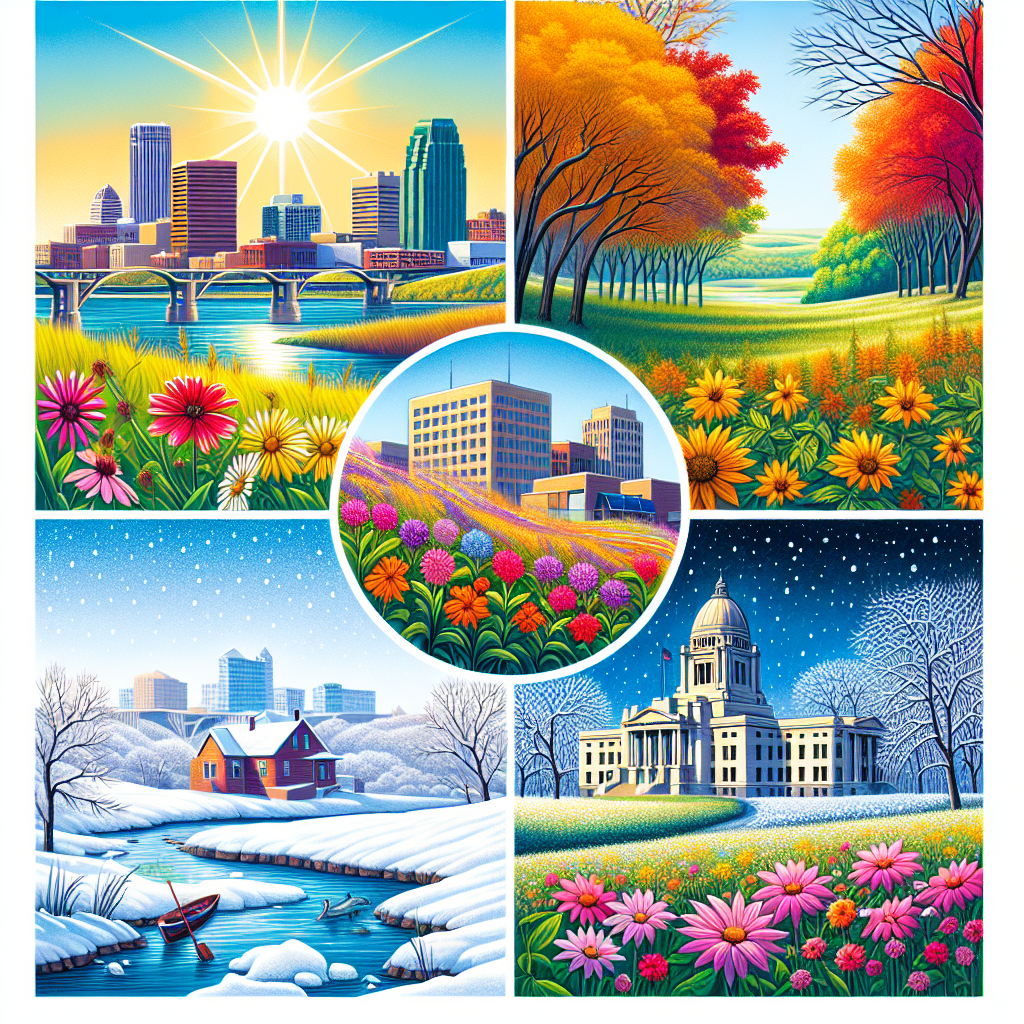
Sioux Falls, South Dakota, experiences a humid continental climate, characterized by hot summers and cold winters. This climate type brings a diverse range of weather patterns throughout the year, influencing both the environment and the daily lives of residents.
Seasonal Temperature Variations
In Sioux Falls, temperatures fluctuate significantly between seasons. Winters are typically cold, with average low temperatures around 6.5°F (-14.2°C) in January. Summers, on the other hand, are warm, with average high temperatures reaching approximately 83.6°F (28.7°C) in July. These variations are typical of the region’s inland location and latitude.
Precipitation and Snowfall
Annual precipitation in Sioux Falls averages about 27 inches (686 mm), with the majority occurring during the warmer months. Snowfall is a common feature of the winter season, averaging around 38 inches (965 mm) annually. This snowfall contributes to the region’s winter landscape and affects various aspects of daily life, from transportation to recreational activities.
Environmental Impacts
The distinct seasons in Sioux Falls have a profound impact on the local environment. The warm, wet summers support a variety of plant and animal life, while the cold winters influence the types of vegetation that can thrive. Additionally, seasonal weather patterns affect water resources, agriculture, and outdoor activities, making an understanding of these patterns essential for residents and policymakers alike.
By recognizing and adapting to these seasonal changes, the Sioux Falls community can better prepare for and respond to the challenges and opportunities presented by our unique climate.